You see a small, fast-moving brown insect dart behind your toaster. Your mind jumps to the worst conclusion. But before you declare a full-scale infestation, you need to be sure. What does a German roach look like, exactly? Mistaking it for a less problematic beetle or a different cockroach species can lead to wasted time, money, and unnecessary panic. This guide is built from years of dealing with these pests, and I'll show you not just the textbook description, but the subtle details and behavioral clues that confirm you're dealing with Blattella germanica.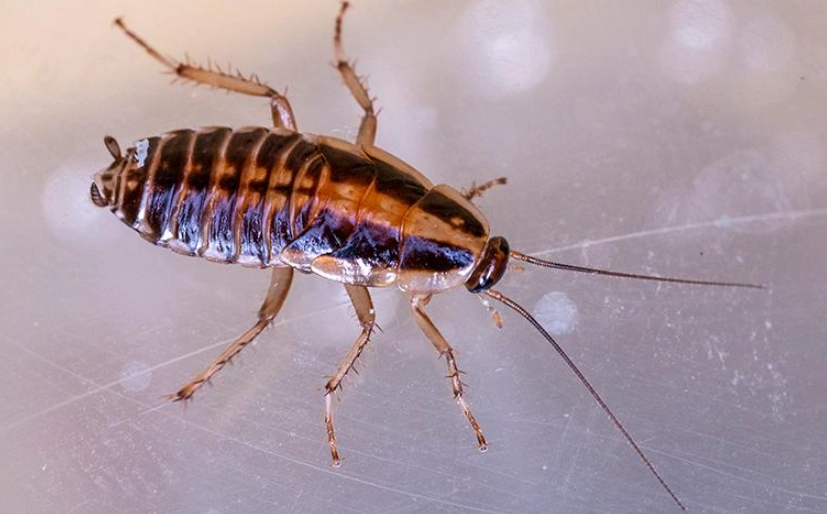
Your Quick Visual Guide
The Basic Blueprint: Size and Shape
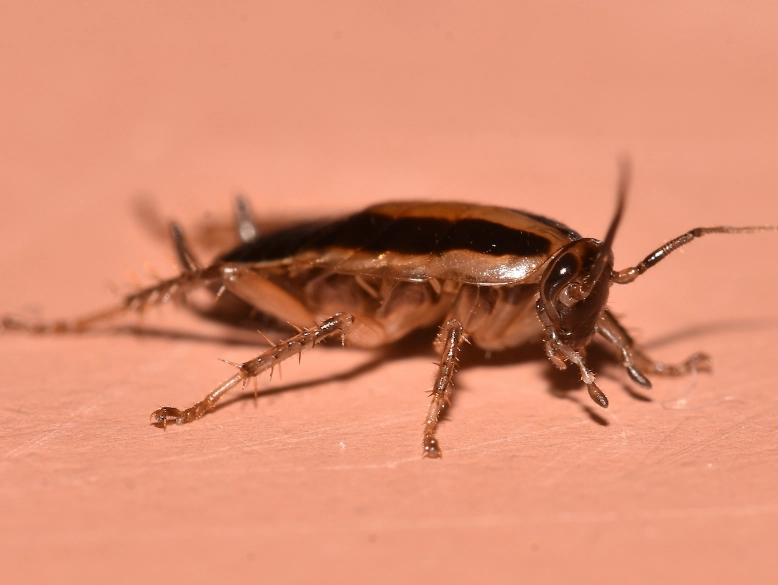
Let's start with the fundamentals. An adult German cockroach is small. Most people overestimate their size. A fully grown adult typically measures between 1/2 inch to 5/8 inch long (about 13 to 16 mm). That's roughly the length of a penny's diameter.
Their body is flat and oval-shaped, which is a dead giveaway for any cockroach. This design isn't for style; it's for survival. That flattened body allows them to squeeze into cracks thinner than a dime. You'll never find a plump, rounded German roach.
Wings and Movement
Both males and females have wings that cover most of their abdomen. Here's a nuance most guides miss: while they have wings, German cockroaches rarely fly. They might glide clumsily if they fall from a height, but they primarily rely on their legs. And boy, are they fast. Their movement is a quick, darting scuttle. If you try to swat one, it will usually vanish into a seam or crevice with alarming speed.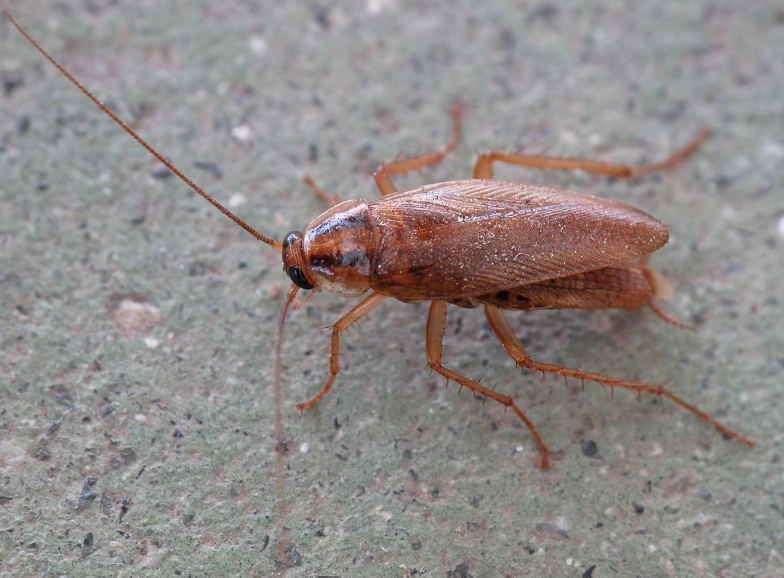
Color and Markings: The Telltale Signatures
Color alone can be deceptive, as it varies. But the pattern is consistent.
The base color ranges from a light tan to a medium brown. They are never black, and rarely a dark mahogany. The single most reliable visual marker is on the pronotum (the shield-like plate behind the head). Look for two parallel, dark brown or black streaks running from the front to the back of the pronotum. These stripes are like their fingerprint.
I've seen countless cases where people mistake other small brown insects for German roaches, but the absence of these two bold stripes is a clear sign you're looking at something else.
Nymphs vs. Adults: Knowing the Life Stages
This is where confusion spikes. A baby German roach (nymph) looks nothing like the adult. If you only know the adult description, you'll miss the early signs of an infestation.
German Cockroach Nymphs: They are tiny, starting at about 1/8 inch long—smaller than a grain of rice. They are wingless and much darker in color, almost black or a very dark brown. As they grow through their molts (instars), they lighten up and the characteristic two stripes on the back begin to develop. However, even small nymphs have a lighter-colored band on their back segment, which is often mistaken for the adult stripes. It's not the same.
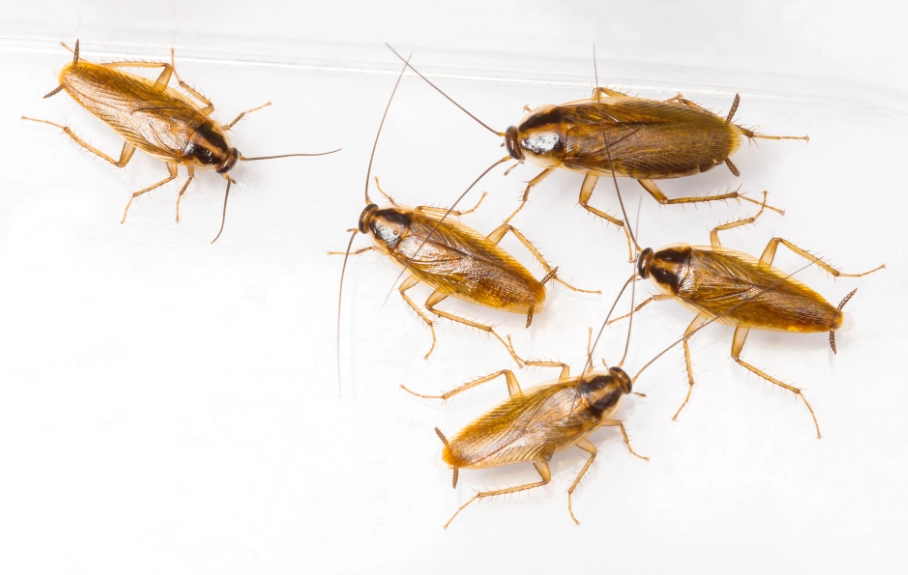
German Cockroach Adults: As described: 1/2 to 5/8 inch, tan to brown, with full wings covering the body and the two distinct dark stripes on the pronotum.
Seeing many small, dark, wingless bugs together is often a stronger sign of an active, breeding infestation than seeing a single adult.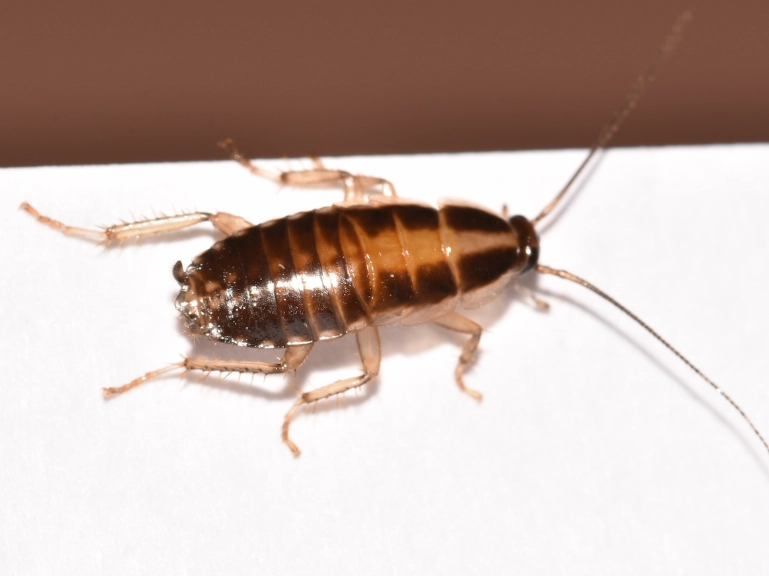
German Roach vs. Common Look-Alikes
Mistakes happen all the time. Here’s a quick comparison to clear things up.
| Pest | Key Differences from German Roach | Where You Might See It |
|---|---|---|
| American Cockroach | Much larger (1.5 inches+), reddish-brown with a yellowish figure-8 pattern behind the head. | Basements, sewers, drains. Less common in kitchen cabinets. |
| Asian Cockroach | Nearly identical in looks! Key difference: they are attracted to light and are strong fliers. | Outdoors, flying towards porch lights. If it flies toward your lamp, it's likely Asian. |
| Brown-Banded Cockroach | Similar size. Lacks the two bold stripes. Has lighter, irregular bands across wings and abdomen. | All over the room (not just kitchen/bathroom), often on walls, behind pictures. |
| Cigarette Beetle / Drugstore Beetle | Round, humpbacked body (not flat). Antennae are clubbed, not long and thin. Moves slower. | In pantry items like flour, spices, dried goods. |
| Oriental Cockroach | Larger (1 inch), glossy black or very dark brown. Looks slow and clumsy. | Cool, damp areas like basements, floor drains, under mulch. |
Where and How to Spot Them: Behavioral Clues
What does a German roach look like in its habitat? Their behavior gives them away as much as their appearance.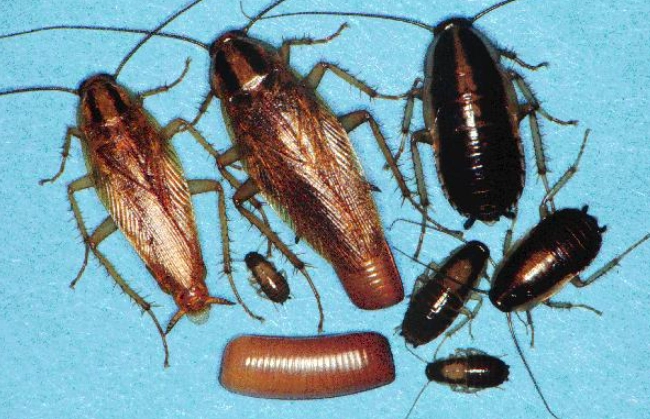
They are thigmotactic—meaning they love tight contact on all sides. You won't find them lounging in the middle of an open floor. Look in the seams and shadows:
- The hinge side of kitchen and bathroom cabinet doors.
- Underneath appliances—the warm motor compartment of the fridge and dishwasher is prime real estate.
- Behind electrical outlet plates and inside switch boxes.
- In the folds of cardboard boxes, especially grocery store boxes.
They are also nocturnal. Spotting one during the day, especially an adult, often indicates a high population where they're being forced out of hiding.
Signs Beyond the Live Bug
Sometimes you won't see the roach itself, but evidence of its activity. Look for:
- Fecal Matter: Tiny, dark specks that look like ground coffee or black pepper. In heavy infestations, these speckles will be concentrated in harborage areas.
- Egg Casings (Oothecae): Small, tan, pill-shaped capsules about 1/4 inch long, often with ridges. They might be glued to hidden surfaces.
- Shed Skins: As nymphs grow, they molt. These pale, papery exoskeletons are a clear sign of a growing population.
What to Do After You Identify Them
So you've confirmed it's a German roach. Panic is not a strategy. Here's the immediate next-step mindset.
First, understand their reproductive rate. One egg case can hold 30-40 embryos. This is why DIY efforts often fail—you kill the ones you see, but a hidden egg case hatches a week later, resetting the problem. According to entomology resources from institutions like the University of California's Statewide Integrated Pest Management Program, their rapid breeding is their greatest strength.
Your goal shifts from identification to inspection and action. Thoroughly inspect the high-harborage zones listed above. Sanitation is critical—eliminate food and water sources. Then, consider a multi-pronged control approach often involving baits, insect growth regulators (IGRs), and residual sprays, applied precisely to harborage areas, not broadly across rooms.
For severe or persistent infestations, professional pest control is usually the most effective and time-efficient solution.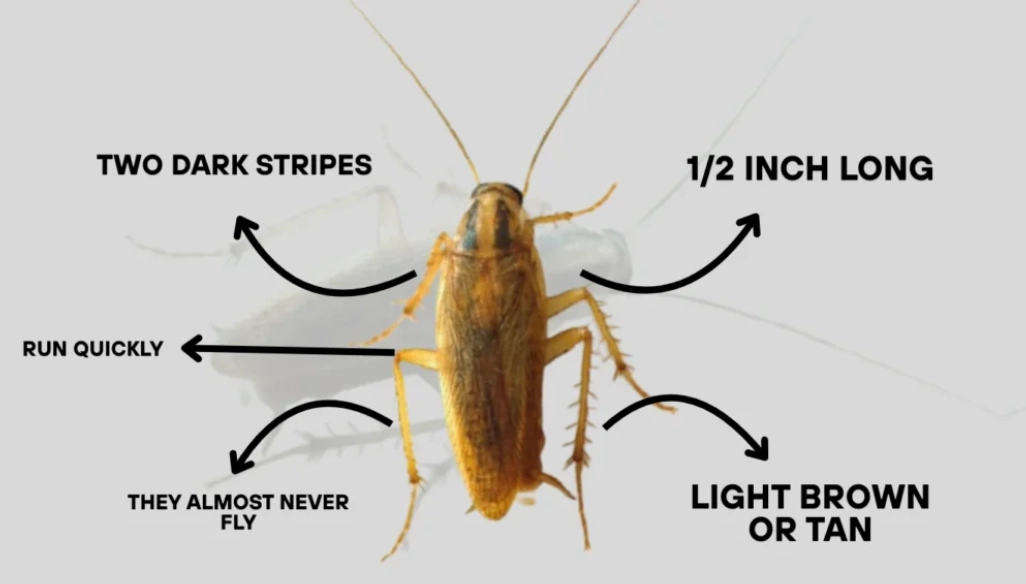
FAQ: Expert Answers to Your Identification Dilemmas
 I only see them in my bathroom, not the kitchen. Could they still be German roaches?

Comments