Let's be honest, when most people see a beetle with bright red and black markings, their first thought isn't "What a fascinating creature!" It's more like, "Is that thing going to eat my roses or sting my kid?" I've been there. For years in my own garden, I'd see clusters of them on my maple tree and panic. The truth about red and black beetles is more nuanced than just "good bug" or "bad bug." Some are harmless bystanders, a few are voracious plant destroyers, and others are actually your garden's allies. Getting it wrong means you might either unleash a pest or accidentally wipe out a helpful insect. This guide cuts through the confusion.
What You'll Find Inside
The Surprising Diversity of Red and Black Beetles
"Red and black beetle" isn't a single species. It's a color pattern worn by dozens of different insects across multiple families. Think of it like seeing a "blue car"—it could be a sedan, an SUV, or a truck. The context—where you see it, what it's doing, its exact shape—tells you everything.
Some, like the Red Milkweed Beetle, are dedicated specialists, feeding only on milkweed plants. Others, like the infamous Red (or Scarlet) Lily Beetle, are imported pests with a taste for expensive ornamental lilies and fritillaries. Then you have the Red-shouldered Bug (often mistaken for a beetle but actually a true bug), which forms massive, alarming-looking congregations but does little to no harm to most garden plants. Mix in look-alikes like the beneficial Cardinal Beetle, and you've got a real identification puzzle on your hands.
The biggest mistake I see? Immediate reach for the spray bottle. That reaction is often wasted effort, or worse, counterproductive.
How to Accurately Identify Common Red and Black Beetles
Forget trying to remember vague descriptions. You need a side-by-side comparison of the usual suspects. This table is your first stop.
| Common Name | Key Identifying Features | Size | What It Eats / Does |
|---|---|---|---|
| Red-shouldered Bug (Jadera haematoloma) |
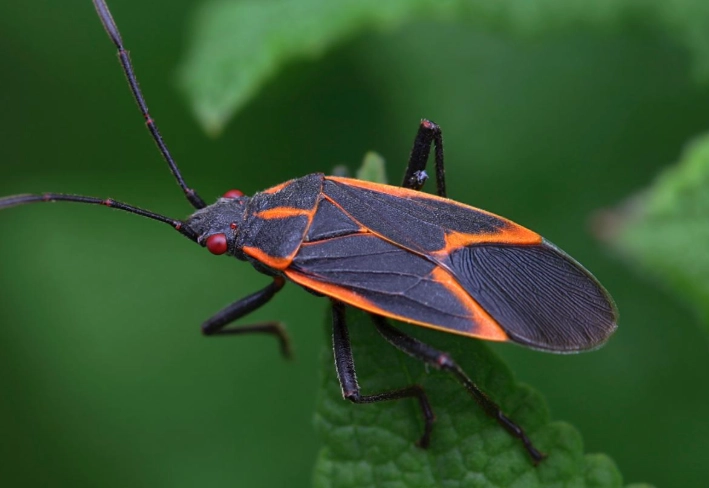
Oblong body, black with bright red edges on its back ("shoulders") and red eyes. Nymphs are bright red. Antennae and beak are long and prominent. Often seen in large groups. | ~1/2 inch | Seeds of goldenrain tree, boxelder maple, and other soapberries. Does NOT eat plants, wood, or fabric. |
| Red Lily Beetle (Lilioceris lilii) |
Brilliant scarlet-red body with a distinctly black head, antennae, legs, and underside. Larvae are slug-like and cover themselves in their own black excrement. | ~1/4 to 1/2 inch | Leaves, stems, buds, and flowers of true lilies (Lilium) and fritillaries. A serious pest. |
| Cardinal Beetle (Pyrochroa serraticornis) |
Uniform red or red-orange body with black, saw-toothed (serrated) antennae. Legs are darker but not jet black like the Lily Beetle. Looks more elegant and slender. | ~1/2 inch | Adults feed on pollen/nectar. Larvae are predators under bark, eating smaller insects. Beneficial. |
| Red Milkweed Beetle (Tetraopes tetrophthalmus) |
Long antennae that are black and arise from the middle of its head (between the eyes). Red body with black spots. Always found on milkweed plants. | ~1/2 inch | Milkweed leaves and stems. Part of the milkweed ecosystem, usually not a major problem. |
| Black-and-Red-Bug (Scentless Plant Bug) (Neacoryphus bicrucis) |
Similar to Red-shouldered Bug but with a more distinct, bold X-shaped red marking on its back. Also a true bug, not a beetle. | ~1/2 inch | Feeds on seeds of various plants, particularly those in the aster family. Generally minor nuisance. |
See the differences? The antennae and leg color are huge giveaways. A beetle with all-black legs and antennae is more likely to be a pest (Lily Beetle). One with reddish or multicolored antennae is often benign or beneficial.
Beyond the Visual: Context is King
Where you find them matters as much as what they look like.
On a lily plant? Almost certainly the Red Lily Beetle. Sound the alarm.
Swarming on the sunny side of your house or on a maple tree? Probably Red-shouldered Bugs. Annoying, but not destructive.
Walking slowly on a flower head? Could be a Cardinal Beetle. Let it be.
On a milkweed plant? That's the Milkweed Beetle's home. It's supposed to be there.
I once spent an afternoon trying to "save" my butterfly weed from Red Milkweed Beetles before realizing I was disrupting a native insect's lifecycle for no good reason. The plant was fine.
Risk vs. Benefit: Which Beetles to Worry About
Not every insect with warning colors is a threat to your garden. Here’s the breakdown from a practical, garden-saving perspective.
The High-Priority Pest: Red Lily Beetle
This is the one that justifies action. Native to Europe, it has no natural predators here and can defoliate prized lilies in days. The adults chew holes, but the larvae are worse—they skeletonize leaves and ruin buds. If you grow lilies, this beetle is public enemy number one. According to reports from state agricultural departments, its range is still expanding in North America.
The Mostly Harmless: Red-shouldered Bug & Kin
These cause panic due to their numbers, not their damage. They don't bite, sting, or eat garden vegetables. Their mouthparts are designed for sucking seeds. The main issue is them becoming a nuisance by entering homes in fall (seeking warmth) or staining surfaces if crushed. The solution here is exclusion and sanitation, not chemical warfare. Rake up fallen seeds from host trees.
The Beneficials: Cardinal Beetle & Similar Predators
This is where people shoot themselves in the foot. Cardinal beetle larvae live under loose bark and feed on smaller wood-boring insects. Killing the adults removes a future generation of free pest control. Other red-and-black insects like soldier beetles are also major predators of aphids and caterpillars.
Safe and Effective Control Strategies (When Needed)
Okay, you've confirmed you have Red Lily Beetles on your lilies. Or maybe Red-shouldered Bugs are literally covering your patio door. Here's what to do, in order of escalation.
For Red Lily Beetles (The True Garden Pest)
This requires a hands-on, consistent approach.
1. Daily Hand-Picking (Non-Negotiable): Start this in early spring when plants emerge. Check the undersides of leaves. Have a bucket of soapy water ready. Knock the beetles off into the bucket—they play dead and drop, so hold your hand underneath. This is the single most effective method. Do it every morning for a few weeks to break the cycle.
2. Neem Oil or Insecticidal Soap for Larvae: The slimy, black-covered larvae are gross to hand-pick. A direct spray of insecticidal soap or neem oil will suffocate them. You must coat them thoroughly. Reapply after rain.
3. The Nuclear Option (Use Sparingly): If infestation is severe, a targeted spray of a product containing spinosad (a bacterial derivative) on the lily plants only. It's relatively bee-safe once dry but highly effective on beetles. Apply in the evening when bees aren't active. Never spray it on flowering plants where bees forage.
For Nuisance Bugs Like Red-Shouldered Bugs
The goal is discouragement and exclusion.
- Seal Them Out: In late summer, caulk gaps around windows, doors, and siding. Install door sweeps. This solves 90% of the "indoor invasion" problem.
- Reduce Their Food Source: If you have a Goldenrain Tree (Koelreuteria paniculata), be diligent about raking up the papery seed pods in fall.
- Vacuum, Don't Spray: For clusters on walls, use a vacuum cleaner with a hose attachment. Empty the bag/canister outside. It's fast and chemical-free.
- Strong Water Blast: A jet of water from a hose can disperse large groups on patios or siding.
I learned the hard way that spraying them on the house just leaves a stain and does nothing to prevent more from coming from the tree next door.
Your Common Questions, Answered
The key with red and black beetles is to pause before you act. Take a moment to identify who you're dealing with. That swarm on your siding is probably just a seed-eating bug party, not a structural threat. That lone crimson beetle on your lily might be a garden helper. By understanding their roles—pest, bystander, or predator—you can manage your garden more effectively and sustainably, saving your plants and your peace of mind.

Comments