Let's cut to the chase. If you've found a gray, papery nest hanging from a tree branch or tucked under your eaves, and you're seeing large, black and white wasps buzzing around with a purpose, you're likely dealing with bald faced hornets. Forget the calm curiosity of a honeybee. This is a different league. I've been in pest management for over a decade, and I can tell you that misidentifying or underestimating these insects is the most common, and potentially painful, mistake homeowners make. This guide isn't just about what they are; it's about what to do when they've decided your property is their new construction site.
What You'll Find in This Guide
What Do Bald Faced Hornets Look Like?
First, a clarification: "bald faced hornet" is a misnomer. They're actually a type of yellowjacket wasp, not a true hornet. But that technicality means nothing when one is dive-bombing your head. Their appearance is distinctive and your first clue.
Imagine a wasp that's been dipped in ivory. They're mostly black, but their face and the front of their abdomen have striking white or pale yellow markings. That "bald face" is a key identifier. They're sizable, typically between 1/2 to 3/4 of an inch long. In flight, they have a smooth, direct, and purposeful movement—no lazy drifting.
Here’s a quick comparison to avoid confusion with their look-alikes:
| Insect | Primary Colors | Size | Key Distinguishing Feature |
|---|---|---|---|
| Bald Faced Hornet | Black & White/Ivory | 1/2" - 3/4" | White face, white banding on abdomen. |
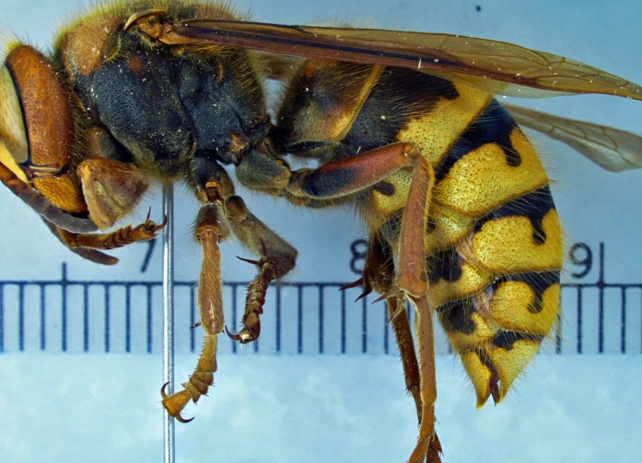
| European Hornet | Brown & Yellow | Up to 1"+ | Larger, reddish-brown head/thorax. |
| Yellowjacket | Black & Bright Yellow | 3/8" - 5/8" | Bright, consistent yellow stripes. |
| Paper Wasp | Brown with Yellow/Red | 3/4" - 1" | Slender body, long legs that dangle in flight. |
I once got a panicked call about "giant bees with white butts." The description was spot-on. It was a textbook bald faced hornet nest just above a backyard playset. The homeowner thought they were docile because they'd been there for weeks. That's the trap. They're not aggressive at a distance, but cross an invisible perimeter and the game changes.
Finding the Nest: Key Locations and Signs
You rarely see just one. Spotting several bald faced hornets in your yard is a strong signal a nest is nearby. Their nests are architectural feats—closed, football or teardrop-shaped structures made of chewed wood pulp (hence the "paper" look). The exterior has a layered, gray appearance, like mache.
They prefer aerial locations, but I've seen them in some surprising spots:
- Tree Branches: The classic spot, especially in deciduous trees. Often 3-10 feet off the ground, but can be much higher.
- Under Eaves & Roof Overhangs: A favorite sheltered spot. Check the corners of your house, garage, and shed.
- Inside Shrubbery: Dense bushes like boxwoods or arborvitae can conceal a small to medium nest.
- On Utility Poles or Shed Walls: Any sheltered vertical surface is fair game.
To find it, don't go stomping around. Just watch. Stand still at a safe distance (at least 15-20 feet from where you see activity) and observe the flight path. They will travel in a relatively straight line to and from the nest entrance, which is a small hole usually at the bottom of the structure. Mark the spot mentally. That's ground zero.
A Critical Note on Ground Nests: While less common, bald faced hornets will occasionally build nests in hollows in the ground or in wall voids. These are exponentially more dangerous to approach. Disturbing the ground near the entrance or drilling into a wall can trigger a mass attack from an unseen colony. If you see hornets consistently entering a hole in the ground or a crack in your siding, treat it with extreme caution and assume a nest is inside.
How Dangerous Are They Really?
This is where internet advice gets fluffy. Let's be blunt. Their sting is intensely painful. The University of Kentucky College of Agriculture, Food and Environment notes that wasp stings like those from bald-faced hornets contain acetylcholine, which contributes to the sharp, burning pain. It's a memorable experience.
But the pain isn't the main issue. It's their behavior.
Unlike honeybees that sting once and die, bald faced hornets have smooth stingers. They can, and will, sting repeatedly. More critically, they are social defenders. Disturb the nest, and they release alarm pheromones. This triggers a coordinated defensive response. You're not facing one angry insect; you're facing a swarm that will chase you for a considerable distance.
The real danger scenarios aren't about a single accidental sting. They're about:
- Lawnmower or Trimmer Impact: Vibrations and direct contact with a hidden ground nest or low-hanging aerial nest.
- Children or Pets Disturbing a Bush: A nest hidden in landscaping is a ticking clock.
- Attempting Removal Without a Plan: Using a garden hose or throwing rocks at a nest is a recipe for an emergency room visit.
For those allergic, the risk is severe. But even for the non-allergic, multiple stings (a "mass envenomation") can cause a toxic reaction requiring medical attention.
A Step-by-Step Guide to DIY Nest Removal (When It's Safe)
I only recommend DIY removal if ALL of the following are true: the nest is smaller than a softball, it's easily accessible (not in a wall or high tree), and you are not allergic. If any of those are a "no," skip to the next section. This is a method I've used for small, early-season nests.
1. Gear Up Like Your Life Depends On It (It Might): - Wear a bee suit or thick, layered clothing with gloves taped to sleeves. - A hat with a mosquito netting veil is the bare minimum for face/neck protection. - Have an escape route planned.
2. Time It Right: Dusk or just before dawn. The entire colony is inside, and they are lethargic in cooler temperatures. Never attempt during full daylight.
3. Use the Right Tool: A commercial wasp & hornet jet spray that shoots a stream 10-20 feet. Don't use a general-purpose bug spray. Saturate the nest entrance and the entire outer surface. The idea is to coat the insects as they emerge.
4. Execute and Retreat: - Approach slowly and quietly. - Spray thoroughly into the entrance hole and coat the nest. - Leave the area immediately. Do not stand and watch.
5. The Waiting Game: Leave the nest for at least 24 hours. Listen for activity the next evening. If silent, you can carefully knock it down into a garbage bag, seal it, and dispose of it. If you hear buzzing, repeat treatment the next night or call a pro.
Pro Insight: Most DIY failures happen because people spray for 3 seconds and run. You need to empty most of the canister onto and into that nest to ensure the insecticide penetrates the paper layers and reaches the core. A half-measure creates angry, poisoned hornets that may rebuild nearby.
When You Must Call a Professional
This isn't an admission of defeat; it's smart risk management. Call a licensed pest control professional if:
- The nest is larger than a grapefruit.
- It's located inside a wall, attic, or underground.
- It's high in a tree or in a hard-to-reach spot over a walkway.
- You, a family member, or a frequent visitor has a known insect sting allergy.
- Your DIY attempt didn't work (you'll know).
Professionals have commercial-grade insecticides, protective equipment, and the experience to handle defensive swarms. They can also often remove the nest structure, which helps prevent future queens from being attracted to the same site. The cost is almost always worth avoiding the physical and legal liability (if someone gets hurt on your property).
Long-Term Prevention Strategies
Stopping them before they start is the best approach. In early spring, queens emerge from hibernation and start scouting. Your goal is to make your property unappealing.
- Inspect Early and Often: April through June, weekly checks of eaves, sheds, and trees for the starter nest (walnut-sized). These are easy to knock down with a broom at night before the colony grows.
- Manage Food Sources: Keep trash cans tightly sealed. Clean up fallen fruit. Use covered containers for pet food outdoors. They are attracted to proteins and sweets, especially in late summer.
- Remove Attractive Materials: If possible, store untreated wood piles away from the house. They use weathered wood for pulp.
- Consider Preventive Treatment: Some homeowners apply a residual insecticide dust (like diatomaceous earth or commercial products) to common nesting sites like inside soffits in early spring. This can deter initial construction.
Look, you'll never prevent every single queen from looking around. But consistent vigilance in late spring can save you a huge headache in August.
Your Bald Faced Hornet Questions Answered
Can I spray a bald faced hornet nest at night?
While wasps are less active at night, spraying a bald faced hornet nest after dark is still a high-risk move for a DIYer. Their paper nests are often in trees or under eaves, making it hard to get a clear, direct shot with an aerosol in the dark. A partial spray can agitate the colony without eliminating it, leading to a defensive swarm the next day. Professionals use specialized equipment and lighting to ensure complete saturation from a safe distance. For ground-level nests, night treatment is standard procedure, but for aerial nests, the risk of error is too high without proper gear.
What's the biggest mistake people make with a bald faced hornet nest near their house?
The biggest mistake is assuming 'out of sight, out of mind.' People notice a small, golf-ball sized nest in early summer and think it's harmless. Bald faced hornets are prolific builders. That small nest can become a basketball-sized fortress housing hundreds of hornets in just a few weeks. By the time you notice increased activity, the colony is large, well-established, and fiercely defensive. The window for easy, low-risk DIY removal is in that early stage. Waiting turns a minor job into a major hazard.
How long does the pain from a bald faced hornet sting last compared to a honeybee?
A bald faced hornet sting delivers a sharper, more immediate burning pain than a honeybee. The initial intense pain typically peaks within 10-15 minutes but can throb for an hour or more. Localized swelling and redness often persist for 24-48 hours. In contrast, a honeybee sting (from the worker bee) is often described as a quick, sharp prick followed by a duller ache. However, honeybee stingers are barbed and remain in the skin, continuing to pump venom if not removed quickly. The bald faced hornet's smooth stinger allows for multiple attacks, which is the greater danger.
Will bald faced hornets return to a nest after it's been removed?
No, the colony itself will not reuse an old nest. Each nest is an annual structure, built new each spring by a single queen and abandoned by winter. However, the physical location can be attractive to future queens. If you simply knock down a nest without treating the area, the scent markers and sheltered spot might encourage a new queen to build nearby the following year. After removal, it's a good practice to scrub the attachment point with soapy water or a mild disinfectant to remove pheromone traces and consider applying a residual insecticide dust to the spot to deter future builders.
The key with bald faced hornets is respect, not fear. Accurate identification gives you power. Understanding their behavior reveals the risks. And having a clear, prioritized plan—from early prevention to professional intervention—keeps you and your family safe. Don't let a paper palace ruin your summer.
Comments