Let's get this out of the way first: if you've found a bunch of mud tubes stuck to your house, shed, or garage, you probably don't need to panic. That's the work of the dauber mud wasp, and it's one of the most misunderstood insects in your backyard. I've spent years watching these creatures, and the biggest mistake people make is lumping them in with aggressive, social wasps like yellowjackets. They're not. A dauber mud wasp is a solitary, non-aggressive insect that's more interested in hunting spiders than bothering you. This guide will walk you through exactly what they are, why they're beneficial, and what to do—or more importantly, what not to do—when you find them.
What’s Inside This Guide?
- What Exactly Is a Dauber Mud Wasp?
- Are Dauber Mud Wasps Dangerous? The Truth About Stings
- How to Identify a Dauber Mud Wasp Nest
- Mud Dauber vs. Other Stinging Insects: A Quick Comparison
- Should You Remove a Mud Dauber Nest? A Decision Guide
- How to Safely Remove a Mud Dauber Nest (Step-by-Step)
- Preventing Mud Daubers from Building Nests
- The Gardener's Secret: Why Mud Daubers Are Actually Beneficial
- Real-Life Scenarios: Case Studies and Common Situations
- Your Dauber Mud Wasp Questions Answered
What Exactly Is a Dauber Mud Wasp?
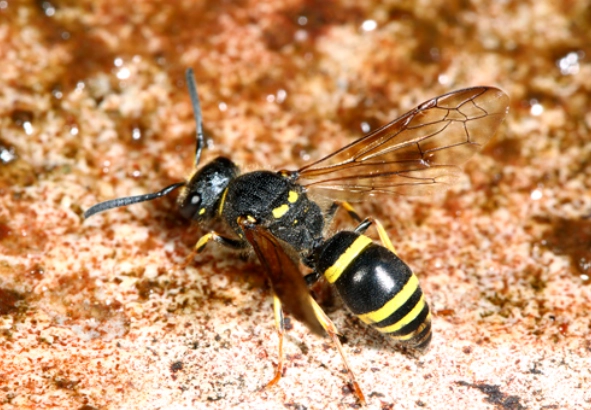
The term "dauber mud wasp" usually refers to several species of solitary wasps in the families Sphecidae and Crabronidae. The most common ones are the black and yellow mud dauber (Sceliphron caementarium) and the blue mud dauber (Chalybion californicum). They're called "mud" daubers for an obvious reason: they build their nests out of mud. A single female does all the work—gathering mud, forming it into cells, hunting prey, laying eggs, and sealing the nest. There's no colony, no queen, no workers. Once she's done, she leaves. The offspring develop inside, emerge the next season, and the cycle repeats.
Are Dauber Mud Wasps Dangerous? The Truth About Stings
This is the number one concern. The short answer is: extremely rarely. I've deliberately worked near active mud dauber nests to photograph them and never been approached, let alone stung. Their stingers are designed for paralyzing spiders, not for defense.
Here’s the nuance most articles miss: a mud dauber can sting if you physically grab it or crush it against your skin. But the instinct to defend a territory or nest just isn't there. They lack the social aggression genes. Compare that to disturbing a paper wasp nest—you'll know the difference instantly.
The real risk isn't from the wasp itself, but from allergic reactions, which can occur from any insect sting. If you have a known severe allergy to bee or wasp stings, you should always exercise caution around any stinging insect. For the vast majority of people, the mud dauber poses less threat than a honeybee.
How to Identify a Dauber Mud Wasp Nest
You'll spot the nest before you see the wasp. They look like little mud sculptures.
Black and Yellow Mud Dauber Nests
These look like a cluster of rough, mud-colored organ pipes stuck together. Each long tube is a separate cell. You'll find them in sheltered spots: under eaves, in garage corners, inside sheds, or even on porch furniture that hasn't been moved in a while.
Blue Mud Dauber Nests
This species often doesn't build its own from scratch. It's a nest pirate. It takes over the old nests of black and yellow mud daubers, cleans them out, and reuses them. So if you see an old, abandoned mud tube nest that suddenly has activity again, it's likely a blue mud dauber.
Mud Dauber vs. Other Stinging Insects: A Quick Comparison
This table cuts through the confusion. Mistaking a mud dauber for a yellowjacket leads to unnecessary fear and pesticide use.
| Feature | Dauber Mud Wasp (Solitary) | Yellowjacket / Paper Wasp (Social) |
|---|---|---|
| Nest Material | Mud | Paper-like pulp (chewed wood) |
| Nest Location | Open, sheltered surfaces (eaves, walls) | Enclosed spaces (wall voids, ground holes) or open paper combs |
| Aggression | Extremely low, non-territorial | High, especially near nest |
| Colony Size | 1 female per nest | Hundreds to thousands |
| Primary Diet | Spiders (for larvae), nectar (adults) | Sugars, proteins, human food |
| Winter Survival | Only new adults overwinter, alone | Queen overwinters, starts new colony |
Should You Remove a Mud Dauber Nest? A Decision Guide
Not every nest needs to go. Here’s my practical framework for deciding, based on location and activity.
Leave it alone if: The nest is in an out-of-the-way spot (high corner of a shed, behind a gutter), appears old and abandoned (no wasp coming/going for days), or is currently active but not near a high-traffic door or living space. Remember, they're providing free spider control.
Consider removal if: The nest is being built over a frequently used doorway, on outdoor furniture, inside a mailbox, or in a child's play structure. Also, if the mud is causing aesthetic damage to a freshly painted surface or historic wood.
How to Safely Remove a Mud Dauber Nest (Step-by-Step)
If removal is necessary, here's the safest method. You don't need insecticides 99% of the time.
- Timing is Everything: Do this at night or very early morning when insects are least active. Even though mud daubers are docile, this is a good general practice.
- Wear Basic Protection: Gloves and safety glasses are sufficient. A long-sleeve shirt is not a bad idea.
- Use a Tool, Not Your Hands: Take a putty knife, paint scraper, or sturdy flat-head screwdriver.
- Scrape and Catch: Slide the tool behind the mud nest and pry it off in chunks. Have a bucket or bag held underneath to catch the debris. The nests are surprisingly brittle when dry.
- Clean the Residue: Use a stiff brush and soapy water to scrub off the remaining mud stains.
What about the nests with holes? Those are already vacated. The new adults have chewed their way out. You're just cleaning up ancient history.
Preventing Mud Daubers from Building Nests
If you'd rather not host them, prevention is straightforward. It's about making your space less appealing as a construction site.
Physical Barriers: This is the most effective method. Install fine mesh screens over vents, gaps under eaves, and other potential entry points to attics or sheds.
Surface Treatment: Applying a coat of paint to rough, unpainted wood surfaces can deter them. They prefer porous surfaces for the mud to adhere to.
Remove Mud Sources: Fix leaky outdoor faucets and downspouts. No puddles mean no easy mud for building.
Regular Disturbance: Mud daubers like quiet, undisturbed spots. Simply moving patio furniture, grills, or stored items every couple of weeks during their building season (late spring to summer) can discourage them from starting.
The Gardener's Secret: Why Mud Daubers Are Actually Beneficial
This is the part most pest control companies won't emphasize. Mud daubers are a cornerstone of Integrated Pest Management (IPM). They are voracious predators of spiders, including many species we consider pests like black widows and brown recluses.
A single mud dauber nest may contain dozens of paralyzed spiders, each provisioned as food for a single larva. By allowing mud daubers to exist on your property, you're enlisting a highly effective, chemical-free spider control agent. Research from institutions like Cornell University's Department of Entomology consistently highlights the importance of such solitary wasps in ecosystem balance.
Think of them as a specialized, flying pest control service that works for free.
Real-Life Scenarios: Case Studies and Common Situations
Let's apply this to real problems.
Scenario 1: The Garage Ceiling Nest. A client had a large, active nest on the ceiling of his detached garage. He was terrified to go in. We watched for five minutes. A single black and yellow mud dauber flew in with a spider, entered a tube, came out, and flew away. I explained the solitary nature. He decided to leave it. By autumn, the nest was silent. He scraped it off easily in November. No pesticides, no fear, and his garage had fewer spiders that summer.
Scenario 2: Nests on a Historic Home. The mud was staining the wood siding. Here, removal for aesthetic reasons was valid. We recommended installing painted, smooth wood trim over the favored nesting areas (under decorative eaves) as a long-term fix, which worked better than repeatedly spraying.
The Common Mistake: The worst outcome I've seen is someone spraying an active nest with wasp killer. They kill one harmless female, leave a toxic residue, and now have a nest full of dead spiders and wasp larvae rotting in their wall—which can attract other pests like carpet beetles.
Your Dauber Mud Wasp Questions Answered
The bottom line is simple. The dauber mud wasp is a neighbor, not an invader. It's a quiet professional going about its business of controlling other pests. A little knowledge turns a source of fear into an appreciation for a natural, efficient part of your backyard ecosystem. Before you reach for the spray can, take a moment to observe. You might just decide to let this expert contractor keep working on your property, rent-free.

Comments