You see a line of tiny, pale insects scurrying along a basement beam. Or maybe you find a pile of delicate wings by the back door. Your heart sinks a little. Is it termites? The question hits you: what do termites actually look like?
Most people's mental image is "white ants." That's not wrong, but it's dangerously incomplete. I've been in pest control for over a decade, and the number one mistake homeowners make is misidentifying—or worse, ignoring—the signs because the bug they saw didn't match a cartoonish idea of a termite. Let's fix that. This isn't just a list of features; it's a field guide to recognizing the enemy in your walls.
What You'll Learn In This Guide
The Cast of Characters: It's Not Just One Bug
Think of a termite colony like a highly organized society with different jobs. And each job has a different look. You might only ever see one type, but knowing all three completes the picture.
1. The Workers (The Ones Eating Your House)
These are the "white ants." They're about 1/8 inch long, soft-bodied, and a creamy, almost translucent white color. They have no eyes (they live in darkness) and straight, bead-like antennae.
Where you'll see them: Almost never in the open. If you break open a damaged piece of wood and find them, that's a confirmed infestation. They avoid light and air. Seeing workers exposed usually means you've disturbed their gallery or there's a major population pressure.
Pro Tip: Don't Wait for Workers
If you're seeing worker termites in the open, the infestation is likely mature and significant. They're the last stage you want to see visually. Earlier signs—like mud tubes or swarmers—are your critical early warning system.
2. The Soldiers (The Guardians)
Soldiers have the same pale body as workers, but their heads are the giveaway. They have enlarged, rectangular, often yellowish or amber-colored heads equipped with large, dark pincers (mandibles) used to block tunnels and fight ants.
Their sole purpose is defense. In some species, like Formosan termites, soldiers have a fontanelle—a small nozzle on their head—they use to shoot a sticky chemical at attackers. It's wild to see.
3. The Swarmers (The Reproductive Alates)
This is the termite most people actually encounter, and it's where confusion runs high. Swarmers are the future kings and queens. They have two pairs of long, delicate wings of equal size that extend well past their abdomen. Their bodies are dark brown or black, and they have compound eyes (unlike workers and soldiers).
The critical sign: They shed their wings. After a brief flight, they break their wings off along a pre-weakened seam. Finding piles of identical, translucent wings near windowsills, doors, or in spider webs is a massive red flag. It doesn't mean they've started a colony in that spot, but it means a mature colony is nearby and sending out scouts.
Termite vs. Ant: The Ultimate Side-by-Side Breakdown
This is the core of identification. Flying ants and termite swarmers emerge at similar times (often spring), causing panic. Here’s how to be a detective.
Forget color alone—some ants are dark, some swarmers are dark. Focus on three body parts:
1. The Antennae: Termite antennae look like a string of tiny beads—they're straight. Ant antennae are elbowed, like a bent arm.
2. The Waist: This is the biggest tell. Ants have a pinched, narrow waist between their thorax and abdomen. Termites have a broad, straight waist—their body looks more uniform, like a tube or a chain of beads.
3. The Wings: Termite swarmers have four wings of equal length. Flying ants have four wings where the front pair is noticeably longer than the back pair. Also, termite wings are fragile and easily shed; ant wings are a bit sturdier.
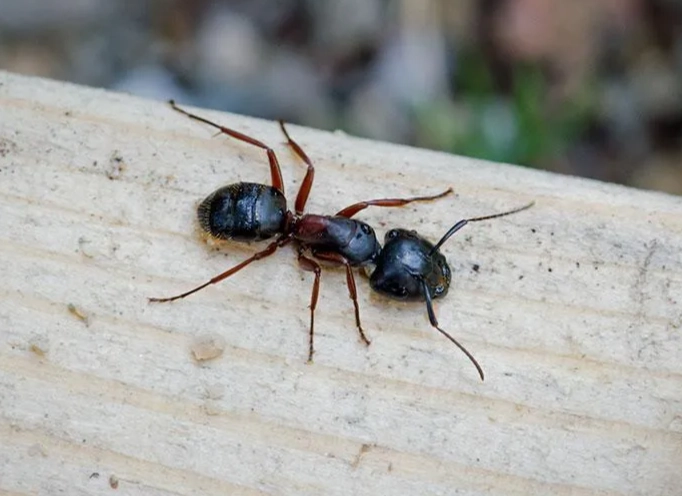
I once had a client insist they had "flying termites" for weeks. They brought in a jar. They were carpenter ants. The treatment plan (and cost) is completely different. Getting this right saves you time, money, and stress.
Beyond the Bug: The Signs That Don't Crawl
Termites are secretive. Often, you see their handiwork before you see them.
Mud Tubes (for Subterranean Termites): These are pencil-sized tunnels of soil, saliva, and feces on foundation walls, in crawl spaces, or along pipes. They're highways connecting the colony in the soil to the wood in your house. If you break one open and see live termites inside, the case is closed.
Hollow-Sounding Wood: Tap on baseboards, window frames, or other wood with a screwdriver handle. Termite-damaged wood sounds papery or hollow because they eat along the grain, leaving a thin veneer of wood or paint on the surface.
Frass (for Drywood Termites): Unlike subterranean termites, drywood termites live inside the wood they eat and push their fecal pellets (frass) out of tiny kick-out holes. This frass looks like tiny, six-sided, wood-colored granules that pile up below. It doesn't look like sawdust, which is more fibrous.
What to Do If You Think You've Found Termites
Okay, let's say you've compared the bugs or the signs. Suspicion is high. Here's your action plan.
First, Don't Panic and Don't Spray. Using a general insect spray on swarmers is useless. You'll kill the few you see, but the hidden colony remains untouched. Worse, you might disrupt their activity, making it harder for a professional to locate the main nest.
Second, Collect Evidence. If you can safely do so, scoop a few bugs (dead or alive) or some wings into a small plastic bag or jar. Take clear, close-up photos of the insects, mud tubes, or frass. This is gold for the inspector.
Third, Call Reputable Professionals for Inspections. Get quotes from at least two or three licensed pest control companies. A thorough inspection should be free or low-cost. They should look in attics, crawl spaces, basements, and around the entire perimeter. Ask them to explain exactly what they found and show you.
Remember, an inspection isn't a commitment to buy their service. It's an information-gathering mission for you.
Your Termite Identification Questions, Answered
What is the single biggest visual difference between a termite and an ant?
The waist. Ants have a very narrow, pinched waist that clearly separates their thorax and abdomen, like an hourglass. Termites have a broad, straight connection between their body segments, giving them a more rectangular or "beaded" appearance without that dramatic constriction. This is the most reliable quick-check feature, even on small insects.
I found light brown wings on my windowsill. Are they from termites?
Very likely, yes. Discarded wings are a classic sign of a termite swarm. After reproductive termites (swarmers) land and pair up, they intentionally shed their wings. These wings are all the same size, translucent, and often found in small piles near light sources like windows or doors. Finding them indoors is a strong indicator you should call a professional for an inspection immediately. Don't just vacuum them up and forget about it.
Are termites always white? Can they be black or dark?
This is a common misconception that leads to missed identifications. Only worker and soldier termites, which live their entire lives hidden inside wood, are pale or creamy white. The termites you're most likely to see—the reproductive swarmers—are often dark brown or black. Their job is to fly out and start new colonies, so they have pigmented, hardened bodies and dark wings for protection in the open air. Relying solely on color is a fast way to misidentify an insect.
Knowing what termites look like is your first, best defense. It turns a vague worry into a specific observation. You move from "I think I might have bugs" to "I saw insects with straight antennae and no pinched waist, and there are mud tubes on the foundation." That shift is powerful. It gets you the right help, faster.
Stay observant. Check those basements and crawl spaces periodically. And remember, when in doubt, get a professional opinion. The cost of an inspection is trivial compared to the cost of ignored termites.
Comments